The Web of Wellbeing
For the first decade of my career, I was a CPA. I was surrounded by financially comfortable people who were miserable, and I wasn't happy either. Born from this came the next decade of my adult life, a time of soul searching, creative collaboration, and immersing myself in books—history, philosophy, poetry, languages, mythology, esoteric mysticism, classical and modern literature, and my own writing, but always living a split-brained life: "money stuff" on one side, meaning on the other. Never the two shall twine. Then something happened.
During a guided deep-work session, feelings around financial matters laid themselves on the table for me to see. My relationship with the financial world needed healing. I needed integration. The two roads of my adult life—the first as a CPA and the second as a soul-searching creative writer—converged, and from the fiery ashes rose: holistic financial wellbeing.
Holistic financial wellbeing includes the intellectual, emotional, physical, and spiritual sides of our relationship with money and financial systems—symbols of resources, energy, and their flow through our surrounding economic ecosystem. This flow requires balance and harmony like any other living energy-resource system, and reluctance to engage in financial matters can be like a tree refusing to participate in the forest's nutrient exchange. Because money isn't an end in itself—but also not the root of all evil. It's a tool, a medium, and like any tool can be used in both invigorating and destructive ways.
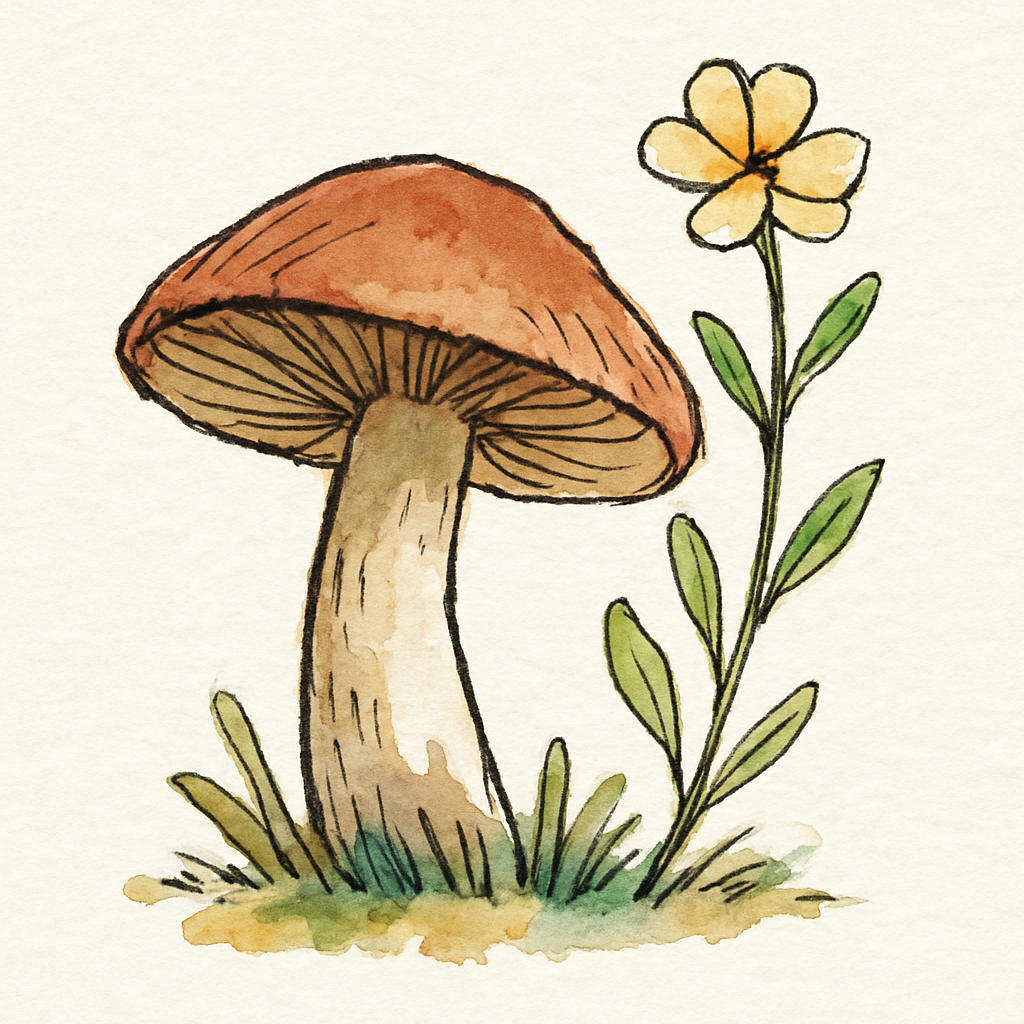
Financial systems can be thought of more like mycelial networks, the invisible web carrying nutrients and information through the forest. Like those deep fungal connections sending support where needed to keep the ecosystem thriving as a whole, your financial wellbeing isn't about accumulation. It's about circulation to strengthen the whole.
In our economic web, every dollar you earn and spend casts a vote for the world you want to live in. Accept payment for healing work? You vote for a psychologically sane world. Buy from local organic farms? You vote for a cleaner earth. Purchase books, theater tickets, or music? You show experiencing art gives life value. Pay yourself fairly? You signal your work has worth.
This is conscious participation. The question isn't whether to participate (you already are), but how consciously you direct your flow so unconscious internal narratives don’t hold you back from plugging into the ecosystems you want to see flourish.
Creatives and healers have especial responsibility. We are edge-dwellers—living in that space where the practical meets the transcendent. In nature, edges are the most diverse and innovative places. Where forest meets meadow, where river meets sea. Places where adaptation happens fastest. Where the most interesting exchanges occur.
Because of this, our financial lives don't look like everyone else's. We don't live in the same ecological niche. Our resources ebb and flow, and that rhythm creates anxiety when we expect constancy. But the problem isn't rhythm, it’s our expectations.
Designing your financial life around natural patterns can grow resilience—showing when to pool reserves during abundance and how diversified streams of income support stability. Nature doesn't do constant. Rivers flood and trickle. Hearts beat and rest. Why should cash flow be different?
When creatives and healers thrive financially, they model a different way of being: proof that economic participation doesn't require selling our souls—but rather, can extend our souls' work in the world.
P.S. What's your soul's work? I'd love to hear.In creative connection,Dawn